All you need to know about visiting Bhutan - Quick Guide
Destination Quick Reference
Capital: Thimphu
Language: Dzongkha
Religion: Vajrayana Buddhism
Currency: Ngultrum (BTN)
Best Time to Visit: Mar – May (Spring) Sep – Nov (Autumn)
Time Zone: BTT (UTC +6)
Getting There
Paro International Airport is the only entry point by air. One of aviation’s most spectacular landings. Request for the window seats.
Drukair and Bhutan Airlines operate flights from Bangkok, Singapore, Delhi, Kolkata, and Kathmandu.
Land Entry via Phuentsholing (from West Bengal), Samdrup Jongkhar (from Assam), and Gelephu (from Assam) border crossings.
What you see in each season
March–May (Spring): Best for trekking, Paro Tshechu, rhododendron bloom. Clear skies. Ideal temperatures.
June–August (Monsoon): Lush green, fewer visitors, festivals in central Bhutan. Not suitable for trekking.
September–November (Autumn): Best visibility for mountain views, Thimphu Tshechu, golden harvests.
December–February (Winter): Black-Necked Crane season in Phobjikha. Snow on passes. Fewer tourists. Deeply atmospheric.
Best Time to Plan Your Journey
For spring festivals (March–May), enquire by December.
For autumn (September–November), enquire by June.
For winter and summer, three months lead time is generally sufficient.
If you have a preferred season for travelling, contact us in advance and we’ll make all the arrangements according to your interests and desired time. We can arrange journeys at shorter notice too.
Even if you’re not sure yet, our travel designers are Bhutanese, deeply experienced, and are genuinely interested in crafting the right journey for you, not the easiest one for us. Just ask and we will respond within 48 hours.
Visa Processing Information
All Visa and SDF processing will be handled by us to ensure a seamless entry for you. A clear photo-page of your passport and a passport-size photo are needed to complete the Visa processing.
Visa
All visitors require a valid passport and Visa arranged through a licensed Bhutanese operator.
Indian & Maldivian nationals do not require a Visa – only a permit obtained on arrival or pre-arranged through us.
Visa Cost: USD 40
Sustainable Development Fee (SDF)
International Visitors pay USD 100 per person per night (rate valid til August 2027)
Indian Nationals pay INR1200 per person per night
Children aged 6 to 12 receive a 50% discount, while those aged 5 and under are exempted
The Sustainable Development Fee is not a charge, it is your direct investment in the destination you came to love. Every dollar of the SDF funds free education, free healthcare, infrastructure in remote communities, preservation of culture and conservation of forests. When you pay it, you are not paying to visit Bhutan. You are helping Bhutan remain the Bhutan you came for.
What you didn't know about Bhutan
1 What is Bhutan and why is it called the Last Shangri-La?
Bhutan is a small Himalayan kingdom nestled between India and China, covering 38,394 square kilometres with a population of around 780,000. It operates as a constitutional monarchy, a form of government formally adopted in 2008.
The name “Last Shangri-La” was never a tourism invention. It emerged from the accounts of the first visitors who entered Bhutan after it opened to tourists in 1974 and discovered a society that had preserved what most of the modern world had spent a century dismantling: intact forests, living culture, unhurried communities, and a government measuring success by the genuine wellbeing of its people rather than economic output alone.
The term originates from James Hilton’s 1937 novel Lost Horizon – a fictional Himalayan paradise of timeless peace. Bhutan earned the comparison not through myth but through the remarkable fact of its actual existence. The monasteries are real. The forests are real. The happiness framework is constitutionally real.
2 What is Gross National Happiness and how does it actually work?
Gross National Happiness (GNH) is Bhutan’s foundational development philosophy, first articulated by the Fourth King Jigme Singye Wangchuck in 1972 and constitutionally enshrined in 2008. It holds that the genuine wellbeing of a nation’s people is a more meaningful measure of progress than Gross Domestic Product alone.
GNH rests on four pillars – sustainable development, environmental conservation, cultural preservation, and good governance – measured across nine domains including psychological wellbeing, health, education, time use, and community vitality. Every five years, the government surveys the entire population across all nine domains. Every proposed policy must pass a GNH screening before implementation. If a road project damages cultural cohesion or biodiversity, it is reconsidered.
For travelers, GNH is not an abstraction. It is the reason Bhutan feels – in ways difficult to articulate on a flight home but unmistakable on the ground – unlike anywhere else on earth.
3 Where is Bhutan and how do I get there?
Bhutan sits in the eastern Himalayas, landlocked between the Tibetan plateau to the north and the Indian states of Sikkim, West Bengal, and Assam to the south. Elevations range from subtropical lowlands at 100 metres to glacial peaks above 7,000 metres.
All international visitors arrive by air at Paro International Airport, one of aviation’s most technically demanding approaches, requiring specially certified pilots to navigate a descentthrough narrow Himalayan valleys. Scheduled flights operate from Bangkok, Singapore, Delhi, Kolkata, and Kathmandu via Drukair and Bhutan Airlines.
Land entry is permitted at three border crossings from India. Phuentsholing in the west (from West Bengal), Gelephu in the south (from Assam), and Samdrup Jongkhar in the east (from Assam). All visitors must hold a valid Visa or permit arranged in advance through a licensed Bhutanese tour operator.
4 Why is Bhutan carbon-negative and what does that actually mean?
Bhutan produces approximately 1.5 million tonnes of carbon dioxide annually. Its forests absorb more than 6 million tonnes, over four times its output, making it one of the world’s only genuinely carbon-negative countries.
This is not a geographical coincidence. It is the result of deliberate, constitutionally-backed decisions. Bhutan’s 2008 constitution legally guarantees a minimum of 60% forest cover in perpetuity. Actual coverage in 2026 exceeds 70%. Over 51% of the country is designated as protected parkland and wildlife sanctuary. Biological corridors connect these zones, allowing snow leopards, Bengal tigers, red pandas, and black-necked cranes to move freely across the landscape.
Nearly all of Bhutan’s electricity comes from renewable hydropower, exported to India and used to fund national social services.
For travelers, this translates into something felt rather than calculated – air that is measurably cleaner, rivers that run clear, forests that are ancient and intact. These are not tourism claims. They are the lived outcomes of half a century of governance that treated nature as a living system to protect, not a resource to manage.
5 What religion do people practice in Bhutan and how does it shape daily life?
Bhutan is the world’s last surviving Vajrayana Buddhist kingdom – the only country where ancient Tantric Buddhism remains both the state religion and the living architecture of everyday culture. Approximately 75% of the population practices Vajrayana Buddhism, with the remaining 25% predominantly Hindu, concentrated in the southern districts.
Vajrayana, the “Diamond Vehicle”, emphasises the transformation of ordinary experience into awareness through ritual, meditation, and mantra. In Bhutan, this is not a private practice. It is woven into every dzong, every festival, every prayer wheel at every mountain pass.
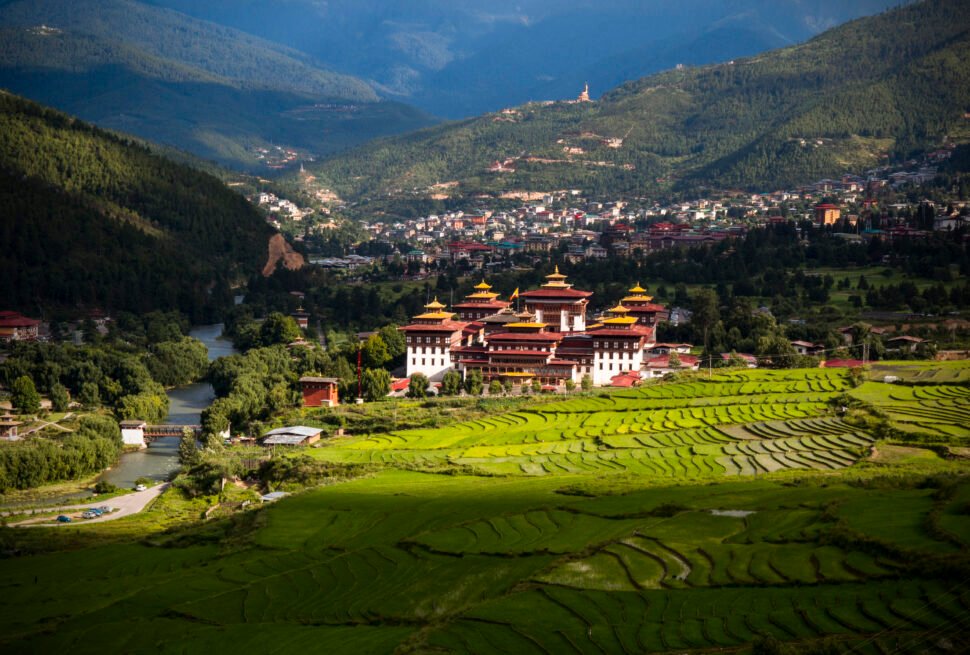
The monastic system holds a formal constitutional role alongside civil government. Monasteries are not museums — they are functioning institutions of learning and community service. The prayers chanted at dawn in a dzong courtyard have been chanted there, without interruption, for centuries. For the traveler who approaches it with genuine curiosity, Bhutan’s Buddhist culture is not merely fascinating. It is, in the unhurried and completely uncondescending way the Bhutanese share it, quietly instructive.
6 What is the best time of year to visit Bhutan?
There is no single best time. The right season depends entirely on what you are seeking.
Spring (March–May) offers ideal trekking temperatures, rhododendron-covered hillsides, and the Paro Tshechu – Bhutan’s most celebrated festival, culminating in the pre-dawn unfurling of the sacred Guru Thongdrel tapestry.
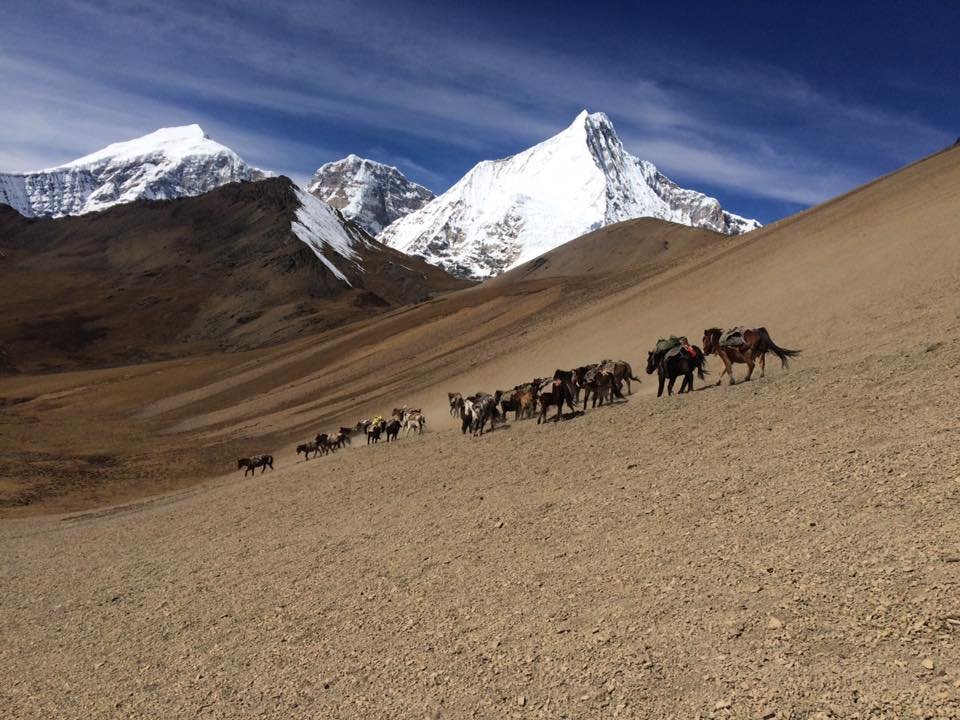
Autumn (September–November) brings the clearest mountain views of the year and the Thimphu Tshechu, Bhutan’s largest festival by attendance. Post-monsoon skies reveal Himalayan peaks including Jomolhari at 7,314 metres.
Winter (December–February) is quieter, colder, and deeply atmospheric. The Black-Necked Crane Festival at Phobjikha Valley – celebrating the cranes’ annual arrival from Tibet – is among Bhutan’s most moving cultural events.
Monsoon (June–August) transforms the landscape into saturated, luminous green. Trekking is limited, but the valleys are beautiful, visitor numbers are lowest, and cultural sites feel most intimate.
Bhutan Bon Voyage designs journeys for every season. Tell us what you want to feel and we will tell you when to come.
7 What is Gelephu Mindfulness City and what does it mean for Bhutan's future?
Gelephu Mindfulness City, officially the Gelephu Special Administrative Region, is one of the world’s most philosophically ambitious urban development projects. Announced by King Jigme Khesar Namgyel Wangchuck in December 2023, it envisions a city where economic vitality, Buddhist heritage, environmental stewardship, and technology coexist by deliberate design, not by compromise.
Located in southern Bhutan’s Sarpang District across approximately 2,500 square kilometres, the masterplan was created by Danish architects Bjarke Ingels Group alongside sustainability consultants Arup and Cistri. Eleven mandala-inspired neighbourhoods will be connected by green corridors and inhabitable bridges, built around the region’s rivers and waterways. A new international airport is under development, with the city slated to open progressively from 2029.
The project has drawn serious global interest; Nobel laureates Joseph Stiglitz and Michael Spence endorsed the model at the 2024 Bhutan Innovation Forum. A rail link connecting Gelephu to major Indian cities is also under development.For travelers, Gelephu Mindfulness City signals something important: Bhutan’s commitment to GNH is not a preservation of the past. It is a blueprint for a future the rest of the world is only beginning to imagine.